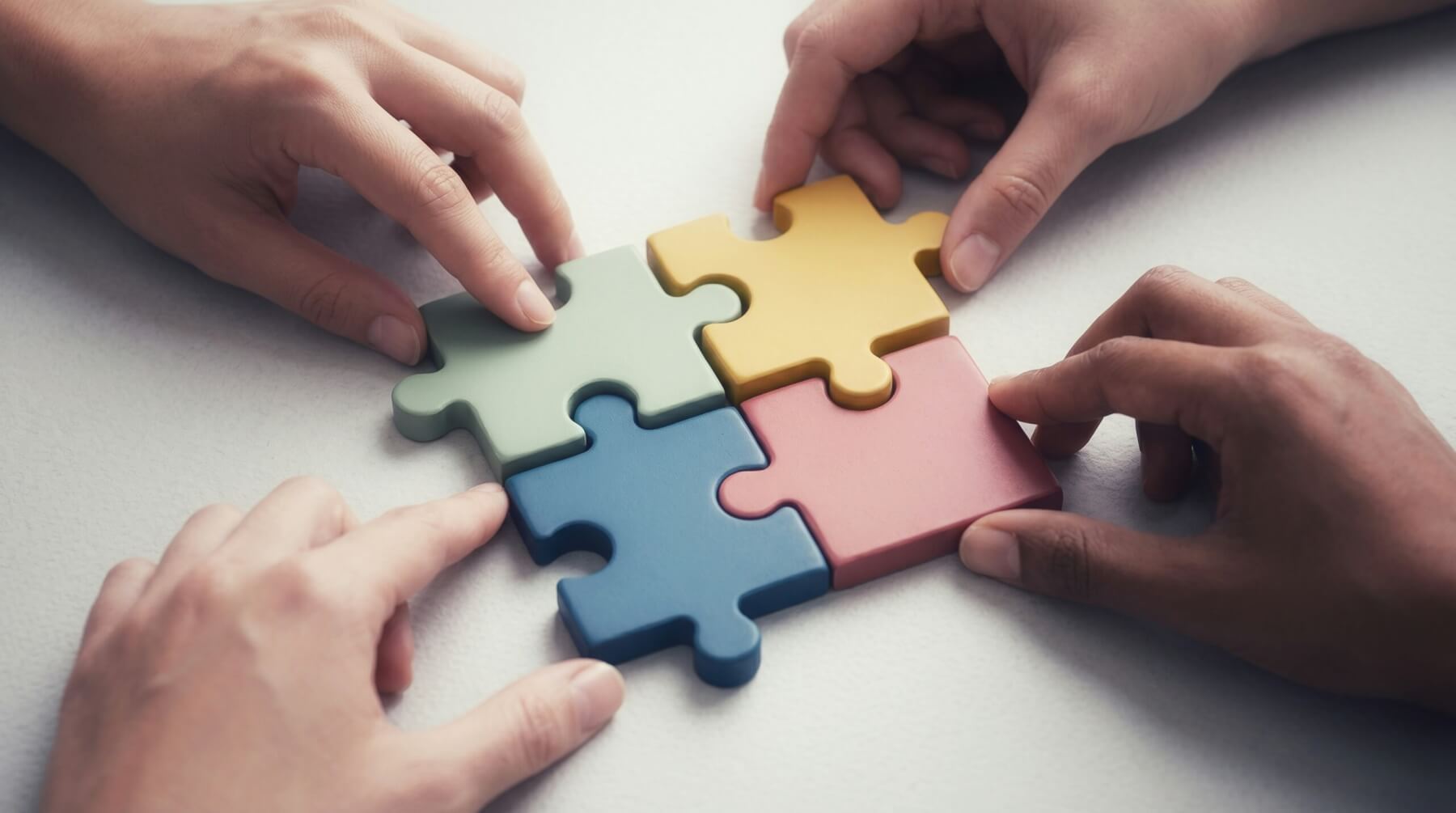
The impact of the social economy is shaped not only by what individual enterprises and organisations achieve, but also by the connections around them. When networks are fragmented, local knowledge remains isolated, opportunities for cooperation are missed, and the link between policy and practice becomes harder to establish. When these connections are stronger, the potential for collective impact grows.
This is the starting point for Strengthening Social Economy Networks for Impact and Resilience. We believe that strengthening the social economy means looking beyond individual organisations and activities to the wider ecosystem in which they operate. It means connecting people, networks, policies and territories in ways that enable them to reinforce one another and create lasting change.
This is a three-year European initiative coordinated by Diesis Network together with Social Economy Europe, EURICSE and REVES – European Network of Cities and Regions for the Social Economy.
From individual actions to systemic change
During these three years, we will be looking at how the different actors that compose the social economy ecosystem can work better together. Enterprises need strong networks to exchange knowledge and access opportunities. Networks need connections with public authorities, businesses and policymakers. And policymakers need to understand local realities to develop policies that respond to actual needs. This is why this initiative brings together stakeholder engagement, macroregional cooperation, capacity building, financial support for smaller organisations, policy dialogue and a European awareness campaign. Each component has a distinct role, but all contribute to the same ambition: strengthening the capacity, visibility and connectivity of social economy networks across Europe.
Why the macroregional approach matters
The macroregional approach is central to the Strengthening Social Economy Networks for Impact and Resilience project. Macroregions are spaces where territories can identify shared challenges, exchange knowledge and build cooperation across national borders. This approach creates a two-way connection between local experience and European-level discussions, ensuring that territorial needs inform wider priorities and that European knowledge and opportunities reach the organisations that need them.
Our Macroregional Focal Points will play a key role in making these connections happen. As regional facilitators and trusted partners, they will engage relevant stakeholders, help identify territorial needs and priorities, bring local perspectives into the European dialogue and encourage cooperation and peer learning across countries.
Macroregional events will build on this work, creating spaces for tailored, territory-based discussions around the challenges and sectoral priorities that matter most locally. These events will support the exchange of experiences and help identify opportunities for cooperation. In this way, collaboration can be grounded in real needs rather than following a one-size-fits-all approach.
Connecting stakeholders and strengthening networks
Stakeholder engagement is at the heart of this work. We want to bring social economy organisations and networks closer to public authorities, local and regional institutions, mainstream businesses, SMEs, and civil society. These connections are essential to addressing challenges that no organisation can tackle alone. Through dialogue, stakeholders can identify common priorities, build partnerships and develop responses that better reflect the economic, social and environmental realities of their territories.
Strengthening Social Economy Networks for Impact and Resilience will provide grants to selected smaller organisations and networks at national and regional levels. This support will help them strengthen their activities, reactivate connections and engage more actively in the social economy ecosystem. We aim to ensure that a wider range of voices can participate in this collective effort and contribute to strengthening networks across Europe.
The call will be published on 1st December 2026. Stay tuned.
Raising awareness and strengthening recognition
Social economy actors work across different sectors and organisational models, which can sometimes make it harder to recognise that they are all part of one wider social economy ecosystem. This is why, in 2027, we will launch a campaign targeting social economy actors themselves. We want to make the ecosystem more visible to those who are part of it, strengthen their sense of belonging, and bring them together to move forward collectively. And we are already working on it! We are holding brainstorming sessions with social economy actors across Europe to develop an engaging tagline for the campaign, one that resonates across different countries, languages and contexts. We want everyone to feel represented and included, leaving no one behind.
The second campaign will kick off in 2028, this time targeting the general public. Our goal will be to raise awareness about the social economy amongst Europeans widely, helping understand what it is, the values it stands for and how it contributes to building a fairer, more inclusive and sustainable society. We want to bring the social economy closer to people’s everyday lives, highlight the positive impact it has in our communities, and show that a different kind of economy is not just possible, but it’s already here.
Turning challenges into policy action
Strengthening Social Economy Networks for Impact and Resilience wants to ensure strong and ongoing links between the project’s consortium and key European institutions. This is why we will organise a series of formal policy dialogues and events, including three flagship roundtables at the European Parliament with the Social Economy Intergroup, as well as targeted meetings with DG EMPL and other relevant services, ensuring that these engagements are grounded in real-world experience and translate into tangible actions.
At the same time, recognising that many social economy stakeholders lack the time or resources to keep up with EU policy processes, we will also make complex legislative, funding and policy developments more accessible. We will produce a range of user-friendly materials, including policy briefs, infosheets, FAQs and thematic webinars, to help national actors understand the implications of EU policies and identify opportunities to engage with them.
The first policy lab, on 25 November, will focus on citizen-led renewable energy and the role of the social economy in the energy transition. As communities face growing concerns around energy security, clean power and affordability, we will explore how to involve residents, particularly people in vulnerable situations, and how to build stronger links between social economy and energy policies. Join us on 25 November to explore solutions with policymakers and social economy stakeholders.
Find out more and register here.
Giving the social economy a stronger voice
From the energy transition to social inclusion, those challenges that Europe call for new ways of thinking and acting. Strengthening Social Economy Networks for Impact and Resilience seeks to strengthen the social economy ecosystem and bring its experience, ideas and solutions to the table to actively shape these debates.
Join us!